CorvinOS Handbook
Complete reference for the CorvinOS console — from first login to advanced agent pipelines.
CorvinOS is a self-hosted AI operating system that connects your messaging channels (Telegram, Discord, Slack, WhatsApp, Email) to a fleet of AI engines through a privacy-first, compliance-ready console. This handbook walks through every screen, every setting, and every concept you need to operate the system effectively.
New here? Start with Getting Started to understand the dashboard and how the system fits together before diving into individual features.
What's in this handbook
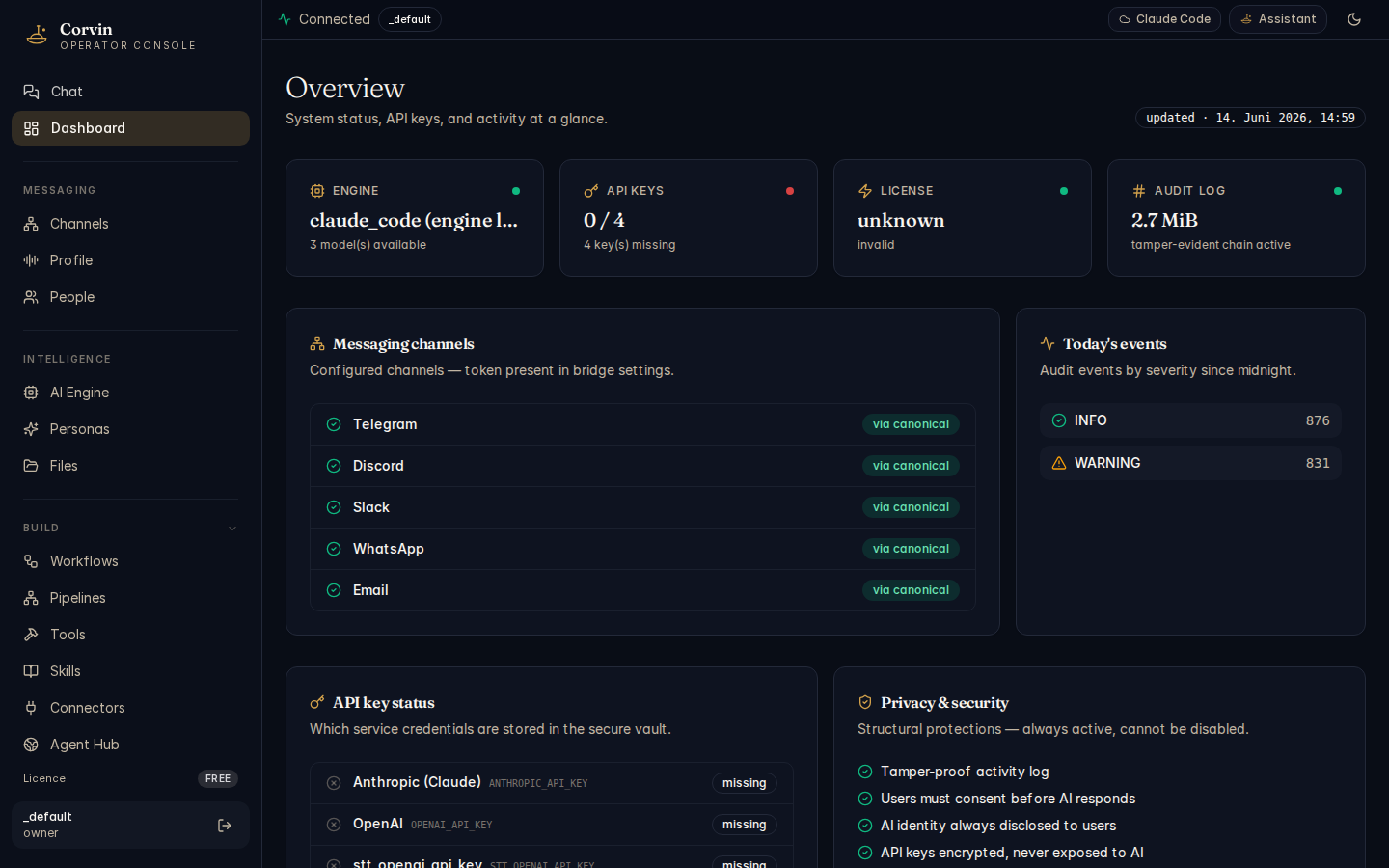
Getting Started
Log in, understand the dashboard status cards, and learn how messaging channels, API keys, and the audit log are represented at a glance.
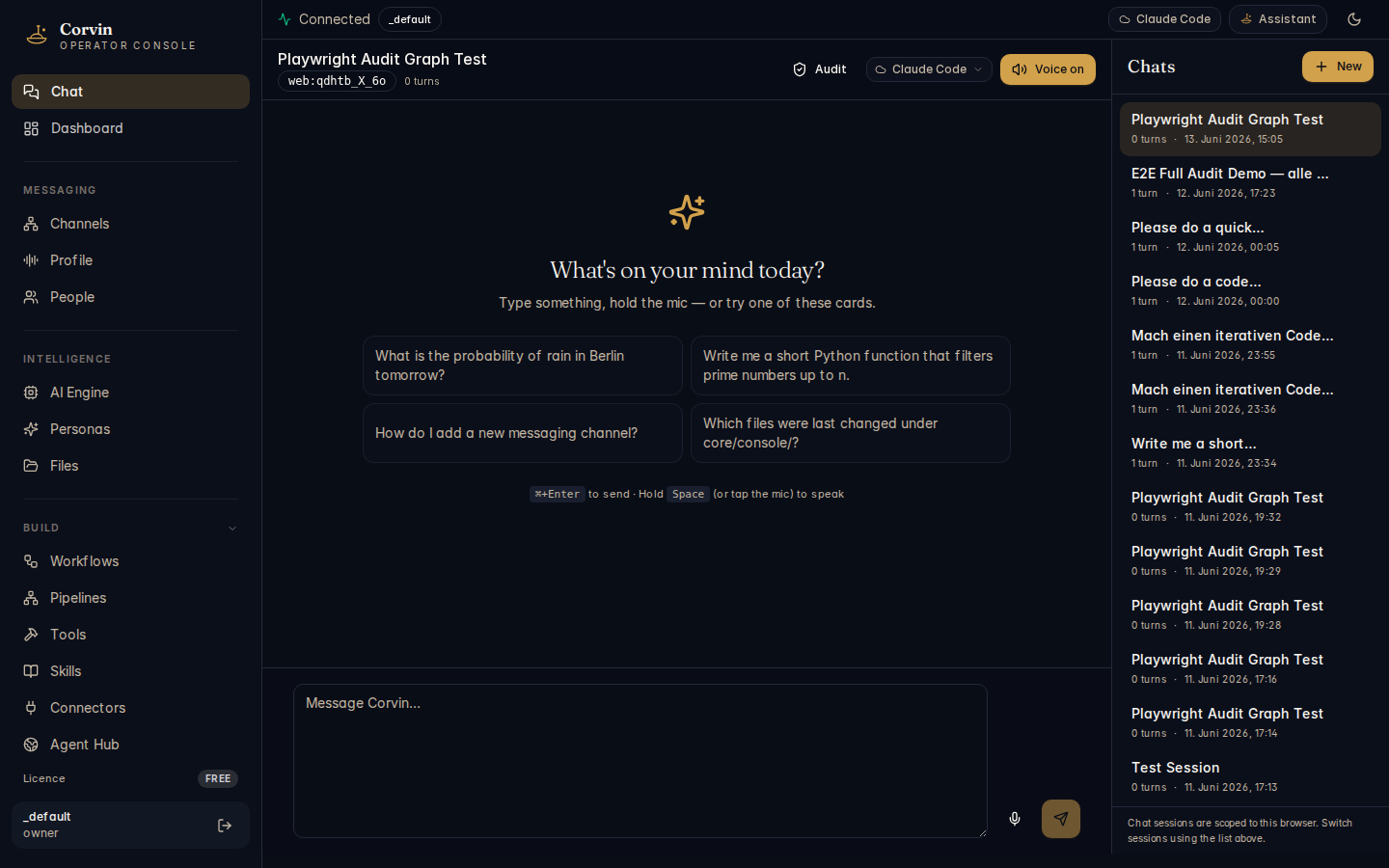
Messaging
Browse past conversations, start new sessions, manage bridge channels, view user profiles, and explore the People directory across all connected platforms.
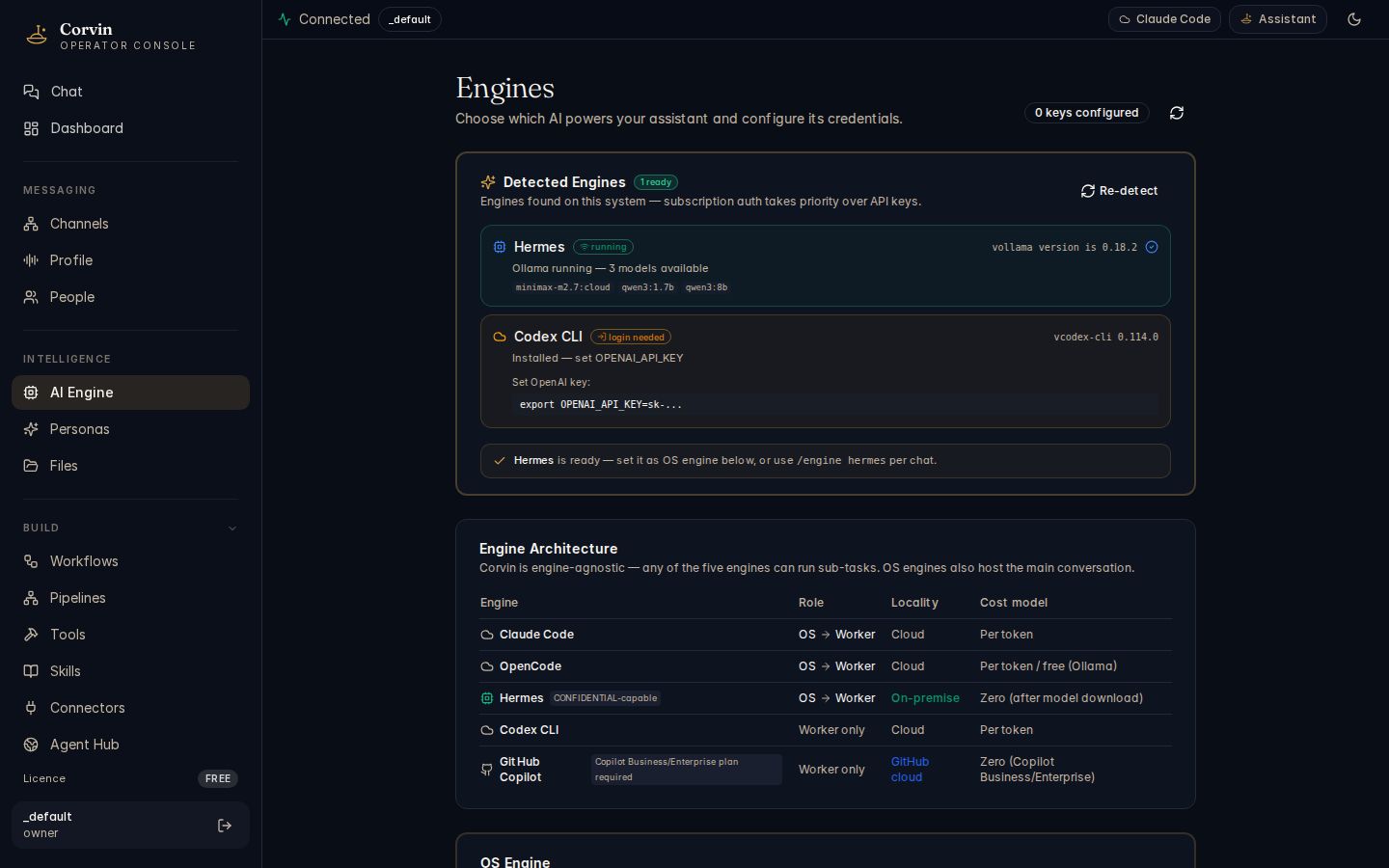
Intelligence
Manage AI engines (Claude Code, Hermes/Ollama, GitHub Copilot, Codex CLI), configure personas, and handle uploaded files used as context.
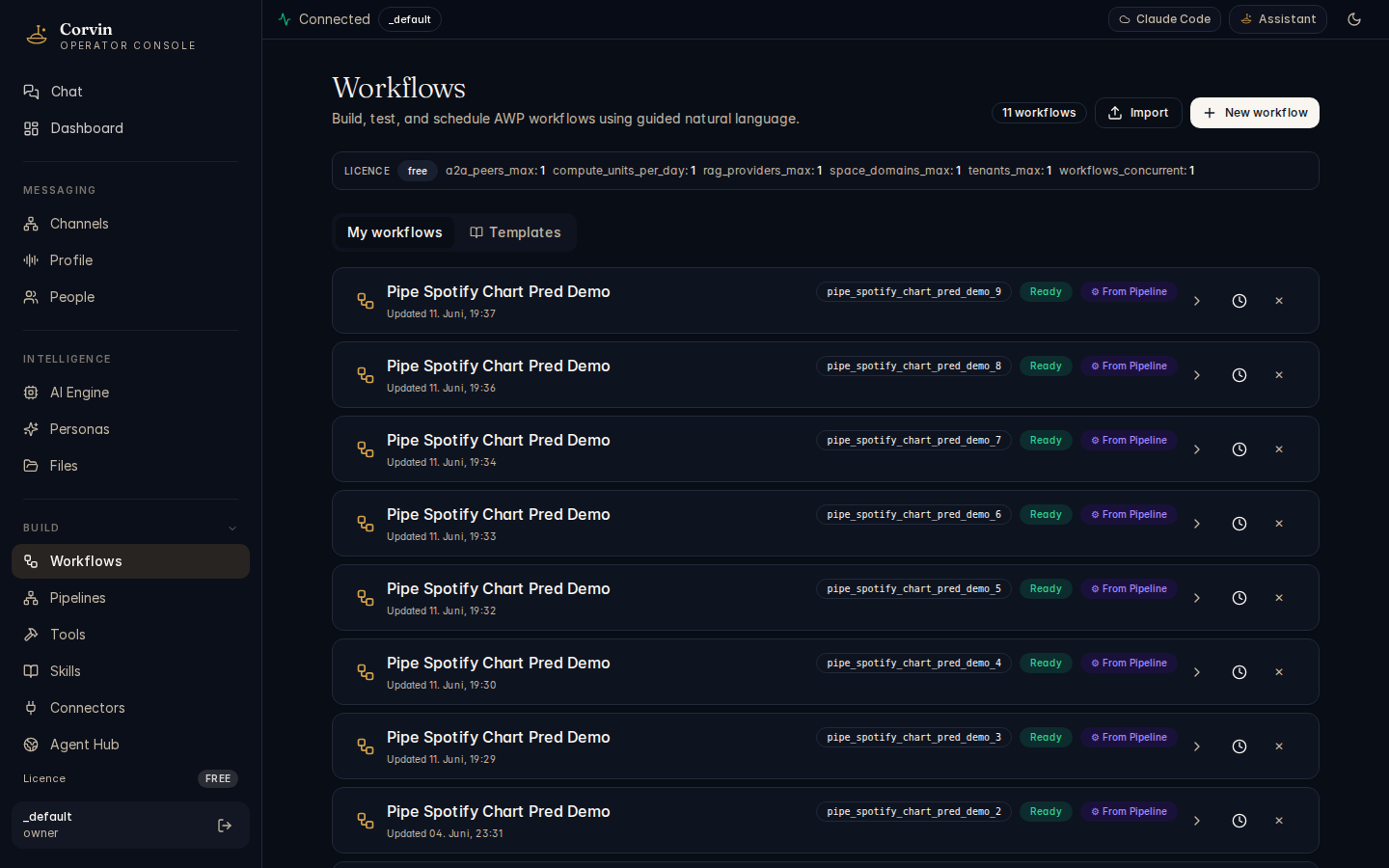
Build
Create multi-step workflows and pipelines, generate sandboxed tools with Forge, define reusable skills, configure external connectors, and manage the agent delegation hub.
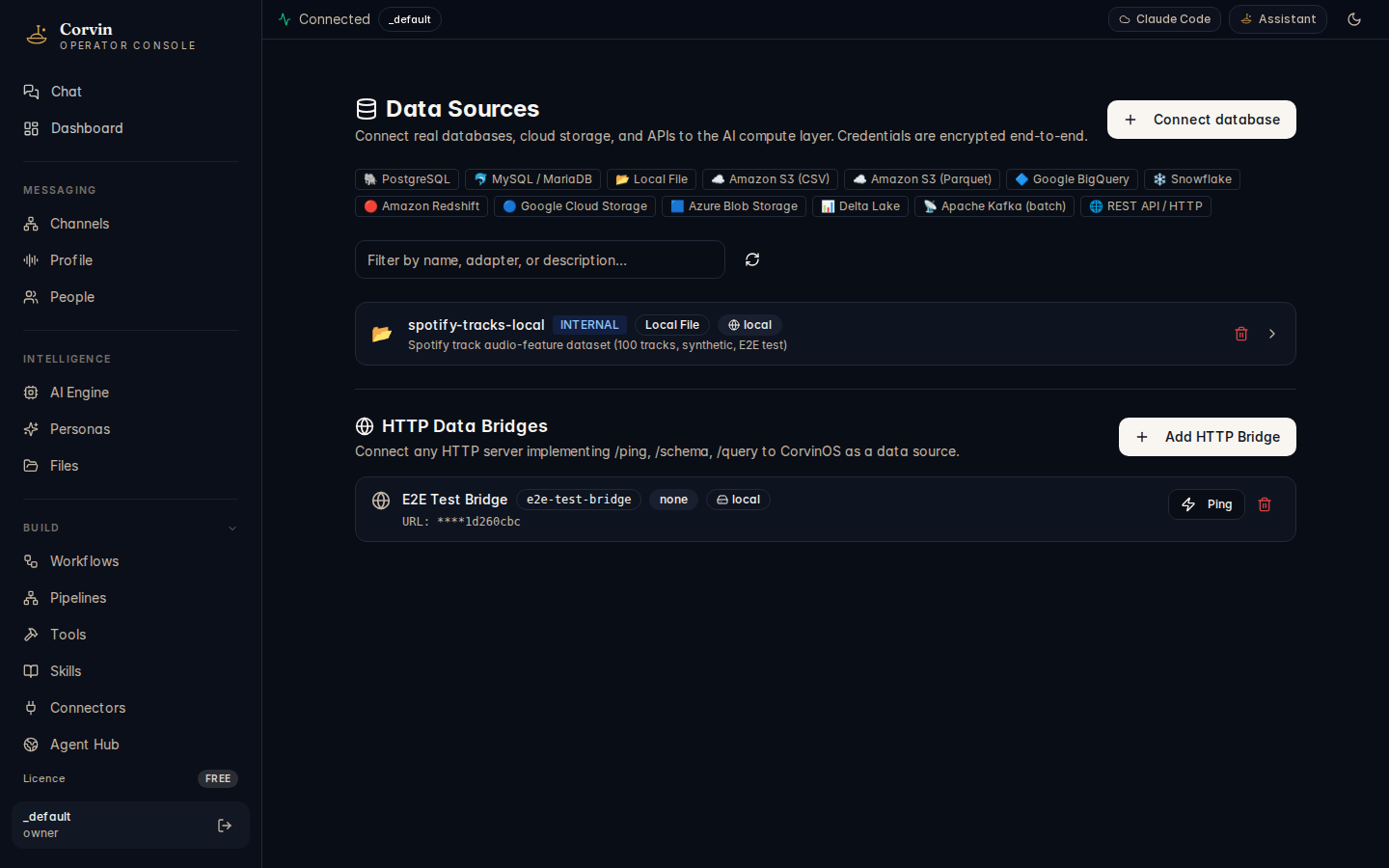
Data
Register external data sources via the DSI v1 interface, manage the vector knowledge store for retrieval-augmented generation, and browse the Knowledge Hub.
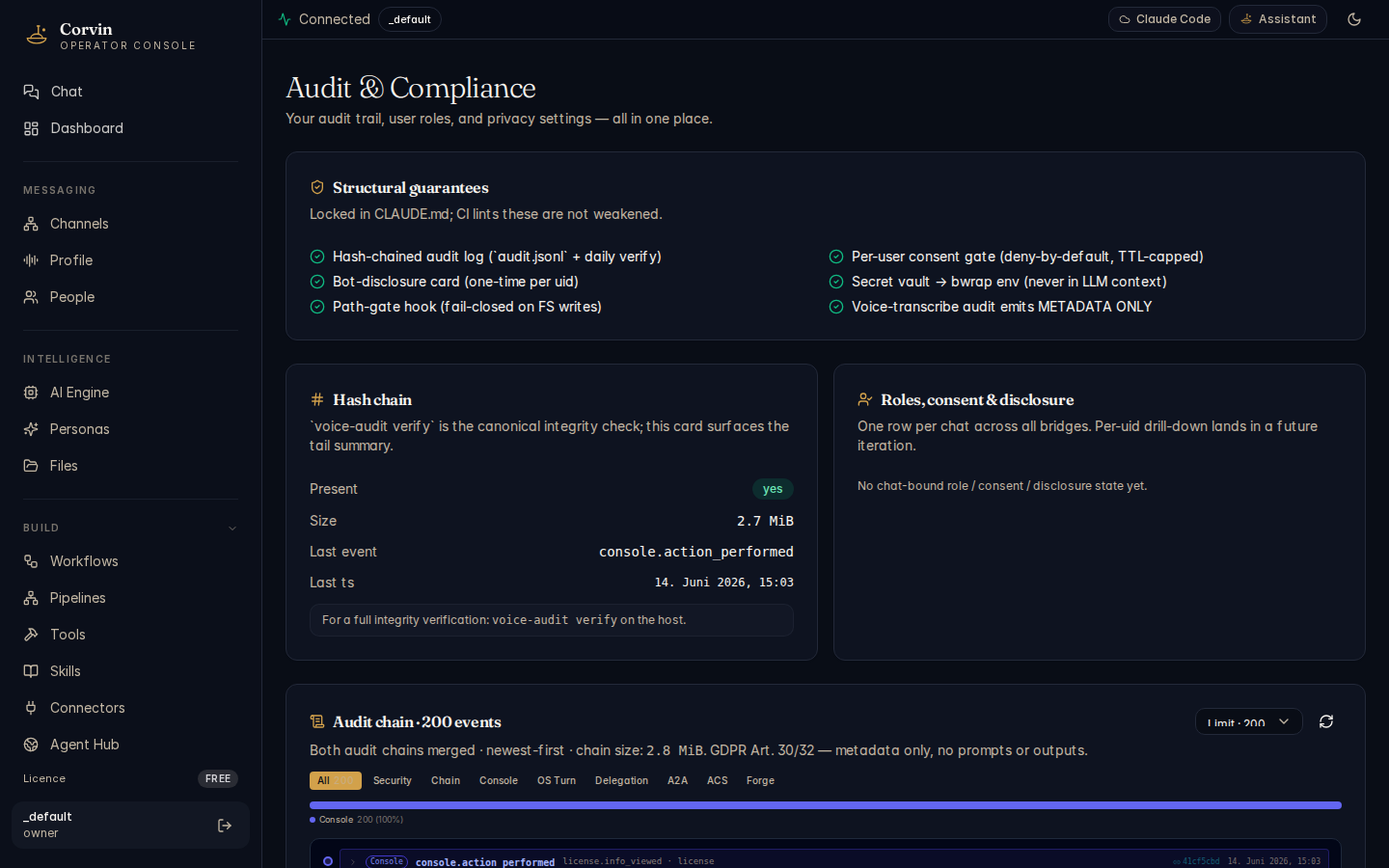
System
Administer compute workers, API key vault, licensing, the hash-chained audit log, organisations, engine control, quality settings, and global configuration.
Quick navigation
- Getting Started — Dashboard, login flow, and first-run orientation
- Messaging — Chat history, bridge channels, voice input, user profiles, and the People directory
- Intelligence — AI engine selection, persona configuration, and file context management
- Build — Workflows, pipelines, Forge tools, skills, connectors, and Agent Hub
- Data — Data source registration, knowledge base management, and Knowledge Hub
- System — Agentic Compute, API keys, license, audit & compliance, organisations, engine control, LDD quality, and settings